You have decided you want to go on a Kenya safari. The question is: where on earth do you start?
Between the choice of parks, the accommodation options, the different vehicle types, the logistics of visas and vaccinations, and the sheer variety of tour operators promising the trip of a lifetime, planning a Kenya safari for the first time can feel genuinely overwhelming. Most people don’t know where to begin, and that is completely normal.
This guide was written by the team at Mouti Tours and Travel, a Nairobi-based safari operator that plans Kenya safaris every week for travellers from the USA, UK, Canada, Australia, and beyond. We’ve guided first-timers through everything from three-day Maasai Mara escapes to fifteen-day bush-and-beach journeys across multiple parks, and we know exactly which decisions matter, which mistakes to avoid, and how to get the most out of every budget.
Follow these eight steps, and you will arrive in Kenya with a plan that works.
| Quick Answer: How to Plan a Kenya Safari in 8 Steps |
| 1. Set your budget: it determines your accommodation tier, parks, group type, and duration. |
| 2. Choose the right time to visit: the dry seasons (Jan–Mar and Jul–Oct) offer the best wildlife viewing. |
| 3. Decide how long to go for: 7–10 days covers two or three parks comfortably; 3 days is the minimum. |
| 4. Pick your parks: Maasai Mara and Amboseli are the classic first-timer combination. |
| 5. Choose your accommodation type: budget camping, mid-range lodge, or luxury tented camp. |
| 6. Decide on vehicle and group type: private safari or group joining safari. |
| 7. Sort your logistics: Kenya eTA, vaccinations, travel insurance, and international flights. |
| 8. Book through a reputable Kenya-based operator: local knowledge and direct lodge relationships make a real difference. |
Step 1: Set Your Budget First
Budget is the single most important planning decision you will make, because it shapes every other choice that follows: which parks you can visit, what kind of accommodation you stay in, how many days you go for, whether you travel privately or in a group, and whether internal flights are within reach.
Kenya safari budgets fall into three broad tiers:
- Budget camping safaris: Approximately USD 150-250 per person per day. You travel in a shared van, sleep in tented camps or basic lodges, and take meals as a group. This is a genuine safari experience at an accessible price, and is particularly popular with solo travellers and younger adventurers.
- Mid-range lodge safaris: Approximately USD 250–450 per person per day. You stay in comfortable lodges or permanent tented camps with en-suite facilities, included meals, and a dedicated vehicle.
- Luxury safaris: USD 500–1,000+ per person per day. Private conservancies, exclusive-use tented camps, dedicated guides, bush breakfasts, and hot-air balloon rides over the Mara fall into this category.
It’s important to understand what is and isn’t included at each tier. Park entrance fees, tipping, international flights, the Kenya eTA, travel insurance, and personal spending are almost always excluded from the per-day rate. Factor these in when calculating your total trip cost.
For a full breakdown of what a Kenya safari actually costs, including park fees by destination, seasonal price differences, and typical extras, read our Kenya Safari Cost Breakdown guide.
Step 2: Choose the Right Time to Visit
Kenya has two primary dry seasons, and these are the best times for wildlife viewing:
- January to March: Short dry season. Excellent across most parks, with reliable big-cat sightings in the Maasai Mara and Amboseli. Fewer tourists than the high season.
- July to October: Long dry season and peak safari season. The Great Wildebeest Migration crosses the Maasai Mara river crossings during July to October; one of the most extraordinary wildlife events on earth. Accommodation books out fast, and this is the most expensive period.
Kenya also has two rainy seasons (April–May and November) when prices drop, crowds disappear, and the landscape turns lush and photogenic. Many experienced safari-goers actually prefer the green season for its atmosphere, bird life, and value, though some park roads become difficult after heavy rain.
Your ideal travel window depends on your priorities: the migration, big-cat sightings, budget, or simply availability. The most important rule is to avoid making a final park and lodge decision before you have confirmed your travel dates.
For a full month-by-month breakdown, see our Best Time to Visit Kenya for Safari guide.
Step 3: Decide How Long to Go For
Duration is closely linked to budget and to how many parks you want to visit. Here is a realistic guide to what you can achieve at each length:
- 3 days: The minimum realistic Kenya safari. One park (typically Maasai Mara or Amboseli), two nights, and approximately four game drives. You will have genuine wildlife encounters but limited time to relax into the experience.
- 5 days: Two parks with a single road transfer or short internal flight. A popular combination is Maasai Mara plus Amboseli, or Maasai Mara plus Lake Nakuru and Naivasha.
- 7 days: The sweet spot. Two to three parks, a comfortable pace, time for a walking safari or cultural visit, and potentially a night at a different lodge type. This is the most common itinerary length our team builds.
- 10 days or more: Three or more parks with genuine depth, or a seven-day safari combined with a three-day beach extension at Diani Beach or Mombasa. This is the format that most consistently produces the best traveller feedback.
Compare specific day-by-day routes in our Best Kenya Safari Itinerary: 3, 5, 7 and 10-Day Route Ideas.
Step 4: Choose Your Safari Parks
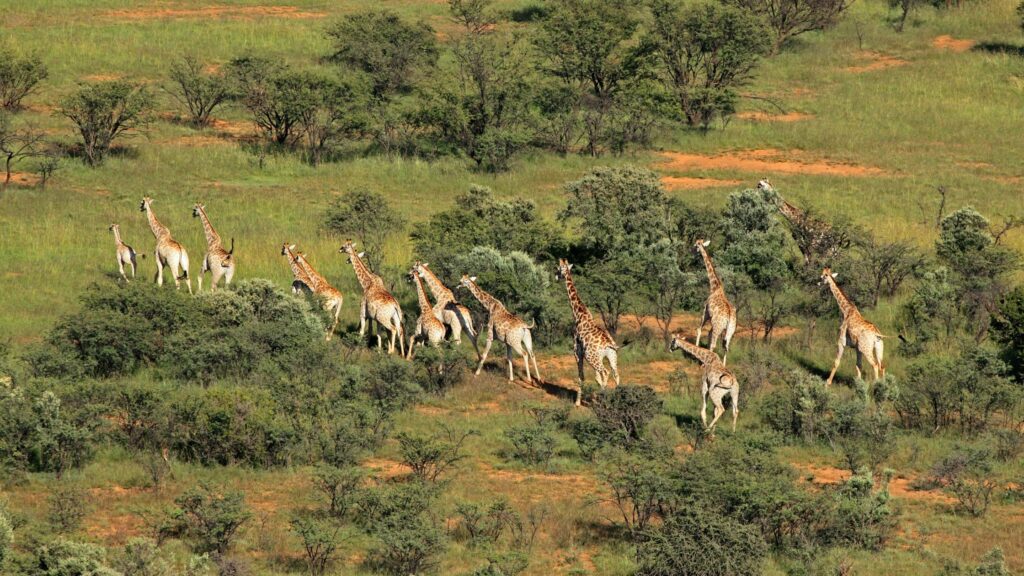
Kenya has more than fifty national parks, game reserves, and private conservancies. For first-time visitors, the choice can feel paralysing. Here is a practical overview of the main options and what each one offers:
Maasai Mara National Reserve
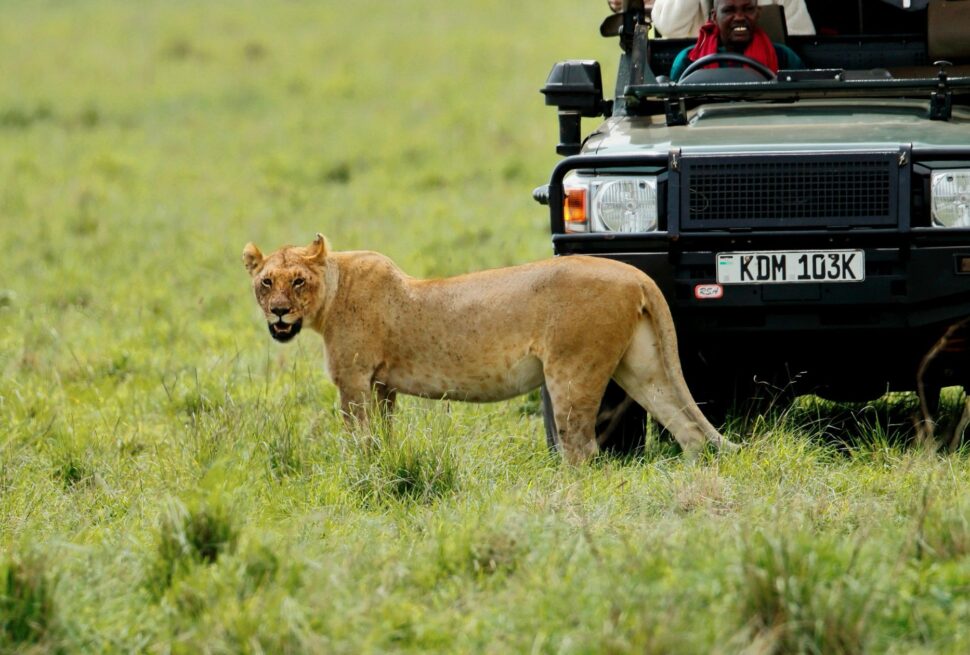
Kenya’s flagship safari destination. The Mara offers year-round big-cat sightings (lion, leopard, and cheetah are all regularly seen) alongside vast elephant herds, buffalo, and the annual wildebeest migration (July–October). The open savannah landscape is iconic. This is the park almost every first-timer should include.
Amboseli National Park
Famous for its large elephant herds moving against the backdrop of Mount Kilimanjaro. On a clear morning, the views of Kilimanjaro rising above the wetlands and elephant families are among the most photographed scenes in Africa. Amboseli is more compact than the Mara, making it easier to cover in two nights.
Samburu National Reserve
A remote, semi-arid reserve in northern Kenya that is home to a set of species found nowhere else in the country; the so-called ‘Samburu Special Five’: reticulated giraffe, Grevy’s zebra, Beisa oryx, gerenuk, and Somali ostrich. The dramatic landscape and lower visitor numbers make this a favourite with experienced safari travellers.
Lake Nakuru National Park
Historically famous for flamingos but now equally important as a sanctuary for both black and white rhino. Lake Nakuru is a compact, easy-to-navigate park that pairs well with Lake Naivasha on a circuit from Nairobi. Buffalo, waterbuck, and leopard are all commonly seen.
Lake Naivasha
A freshwater lake in the Rift Valley surrounded by yellow fever trees and home to large hippo populations. Naivasha is unique in that it offers activities beyond game drives: boat safaris, walking with wildlife on Crescent Island, and cycling safaris at Hell’s Gate National Park next door.
Tsavo East and Tsavo West
Together forming one of the largest national parks in the world. Tsavo East is flat, dry, and red-dusted; known for its ‘red elephants’ (coated in the park’s distinctive laterite soil). Tsavo West is more hilly and forested, with Mzima Springs offering a rare chance to watch hippos and crocodiles from an underwater viewpoint. Both parks are excellent for those who want wilderness without the Mara’s visitor numbers.
Aberdare National Park
A highland forest park at over 2,000 metres, the Aberdares offers a completely different Kenya safari experience: forest-dwelling wildlife, dramatic waterfalls, and the legendary Treetops Lodge where Queen Elizabeth II was famously staying when she acceded to the throne in 1952.
Ol Pejeta Conservancy
A private conservancy near Mount Kenya that is home to the largest black rhino population in East Africa and the last two northern white rhinos on earth. Ol Pejeta also hosts a chimpanzee sanctuary. It pairs naturally with Samburu on a northern Kenya circuit.
| First-Timer Recommendation |
| For most first-time visitors, the Maasai Mara plus Amboseli combination offers the ideal blend of classic savannah wildlife, Kilimanjaro scenery, and manageable logistics. Alternatively, a Maasai Mara, Lake Nakuru, and Lake Naivasha circuit gives excellent variety in 5–7 days without requiring internal flights. |
Step 5: Choose Your Safari Accommodation Type
Kenya’s safari accommodation spans an enormous range, from simple tented camps with shared bathroom facilities to private conservancy lodges where the nightly rate includes a dedicated guide, a private vehicle, and a chef. Understanding what is available at each tier helps you set realistic expectations before you book.
- Budget camping camps: Simple but authentic. You sleep under canvas with basic bathroom facilities (sometimes bucket showers in the most remote locations). Meals are communal and hearty. This option is best for travellers who prioritise wildlife over comfort and want to stretch their budget across more parks.
- Mid-range permanent tented camps and lodges: En-suite tents or lodge rooms with hot water, included meals, a swimming pool, and nightly campfire sessions. This is the most popular category and the one that delivers the best balance of comfort and immersion for most travellers.
- Luxury lodges and private conservancy camps: Exclusive camps with plunge pools, private game drives, fine dining, and conservancy-exclusive vehicle access. In the Mara conservancies surrounding the national reserve, you get access to areas with almost no other vehicles, a genuine advantage for wildlife encounters and photography.
Note that accommodation location has a direct impact on logistics. A lodge inside or on the boundary of a national reserve means shorter drives to wildlife. A lodge 45 minutes outside the park boundary means 90 minutes of transit every day. Always ask your operator where within the park system a lodge is physically located before confirming.
Step 6: Decide on Your Safari Vehicle and Group Type
The two most common questions at this planning stage are: should I book a private safari or join a group? And which type of vehicle will I travel in?
Private Safari vs Group Joining Safari
A private safari means a dedicated vehicle and guide exclusively for your party. You set your own game-drive schedule, stay longer at sightings, and travel at your own pace. This option is ideal for couples, families, photographers, and anyone who values flexibility and privacy. It is more expensive than a group joining safari.
A group joining safari puts you in a vehicle with up to six strangers sharing the same game drives. The cost is significantly lower because it is shared. For solo travellers and budget-conscious visitors, it is an excellent option, and many people form lasting friendships with their vehicle-mates. The trade-off is less scheduling flexibility.
Safari Van vs Land Cruiser
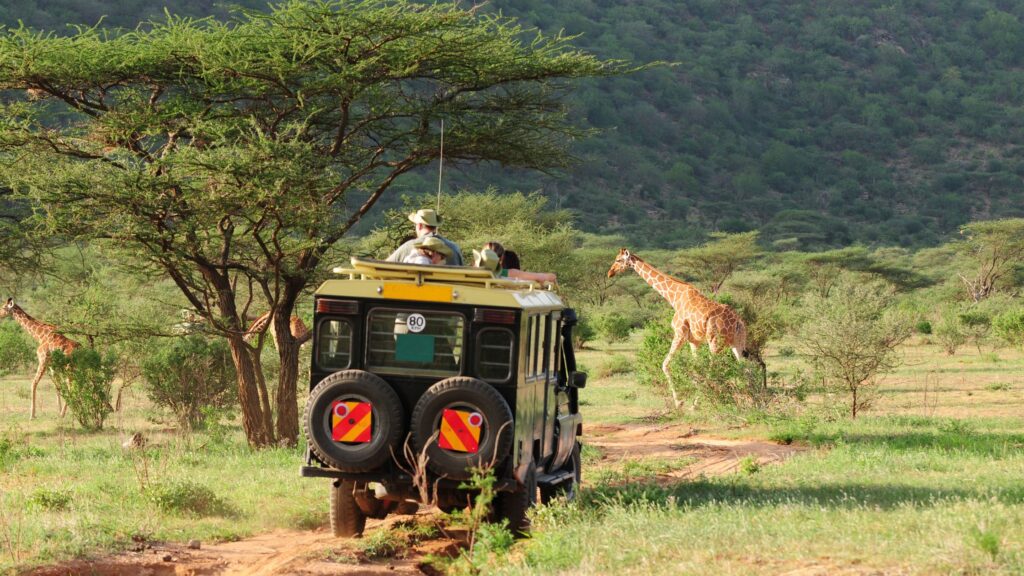
The classic Kenyan safari vehicle is a pop-top minivan (typically a Toyota Land Cruiser or Nissan Safari) that accommodates six passengers with a raised roof for standing game viewing. These are perfectly capable across most park roads. For more remote parks with difficult tracks (particularly Samburu, Tsavo West, or off-road Mara driving) a 4×4 Land Cruiser with a customised open-sided game-viewing body offers better ground clearance, better access, and a more photographic viewing angle.
Step 7: Sort Your Practical Logistics
Once your safari framework is confirmed, the following logistics need to be locked in well before departure:
Kenya eTA (Electronic Travel Authorisation)
All international visitors to Kenya must apply for an eTA online before arriving. It is no longer available on arrival. Applications are typically approved within three working days, but the official guidance recommends applying at least two weeks before travel. Your passport must be valid for at least six months beyond your departure date from Kenya. Keep both a digital and a printed copy of your approval.
For a full guide to the application process, documents required, and common issues, see our Kenya eTA for Tourists guide.
Vaccinations and Health Preparation
Consult a travel medicine clinic at least four to six weeks before departure to discuss your vaccination requirements. Kenya is a malaria-risk country, and antimalarial medication is strongly recommended for most safari itineraries. Commonly recommended vaccinations for Kenya include hepatitis A, typhoid, and (for some travellers) yellow fever. A yellow fever vaccination certificate is required if you are arriving from a yellow fever endemic country.
Travel Insurance
Standard travel insurance is not adequate for a Kenya safari. Your policy must include emergency medical evacuation coverage; the cost of air evacuation from a remote national park to Nairobi can exceed USD 20,000 and is not covered by basic policies. Specialist providers such as World Nomads offer policies with Africa-specific coverage. Print your documents and keep the emergency contact number saved in your phone before you travel.
International Flights
Nairobi’s Jomo Kenyatta International Airport (JKIA) is the primary international entry point for Kenya safaris. Direct flights operate from London (British Airways, Kenya Airways), and connecting flights are available from the USA, Canada, and Australia via hubs including Amsterdam, Doha, Dubai, and Nairobi. If your itinerary ends with a beach extension, Mombasa’s Moi International Airport also handles international arrivals from some routes.
Step 8: Book Through a Reputable Kenya-Based Operator
This is the step that determines whether your safari lives up to its promise. The difference between a good and a great Kenya safari almost always comes down to the quality of the operator you book with, not the parks you visit.
Here is why booking with a licensed, Kenya-based operator delivers better results than booking through an international platform or attempting a fully DIY itinerary:
- Local knowledge: A Nairobi-based operator knows current park conditions, which specific camps are performing well this season, and which roads are accessible after rain. This real-time intelligence cannot be found on a booking website.
- Direct lodge relationships: Kenya operators often hold room allocations with partner lodges, meaning better rates, priority access during high season, and flexibility to make changes if conditions require it.
- Itinerary customisation: A good local operator will ask you what you actually want (big cats, elephant herds, a walking safari, a photography focus) and build a route around your priorities rather than a generic template.
- Support on the ground: If something goes wrong (a flight delay, a road closure, an unexpected illness) a local operator can respond in real time. An international booking platform cannot.
Before confirming any booking, ask the operator the following questions:
- Are you KATO (Kenya Association of Tour Operators) registered?
- What is included and excluded in the quoted price?
- Which specific lodges and camps will I stay in?
- What type of vehicle will I travel in, and what is the maximum group size?
- What is your cancellation and rebooking policy?
- Do you have verifiable reviews from recent clients?
At Mouti Tours, we are a Nairobi-based team led by Joe Mouti, with guides including Peter Mouti and Fred Mouti who have years of on-the-ground experience across Kenya’s parks and coastline. We hold a 5-star Google rating and have guided clients from across the English-speaking world through safaris ranging from three-day Maasai Mara trips to extended multi-country itineraries. Every quote we send is transparent, detailed, and built around the individual client, not a template.
Kenya Safari Planning at a Glance
Use this table as a quick reference when working through your planning decisions:
| Planning Stage | Key Decision | What It Affects |
| Budget | Daily rate tier (budget / mid-range / luxury) | Parks, accommodation, group vs private, duration |
| Timing | Which season to travel (dry, shoulder, or green) | Wildlife density, migration, crowds, park costs |
| Duration | How many days (3, 5, 7, 10, or more) | Number of parks, pace, internal flights vs road |
| Parks | Which reserves and how many to include | Total distance, logistics, wildlife priorities |
| Accommodation | Lodge, tented camp, or camping | Comfort level, price, location within the park |
| Transport | Private 4×4, group van, or internal bush flights | Flexibility, vehicle access, luggage allowance |
| Booking | DIY or operator-assisted; local vs international | Value, itinerary quality, support, reliability |
| “The most common planning mistake we see is choosing parks based on names alone. Everyone has heard of the Maasai Mara (and rightly so), but some clients are better suited to Amboseli or Samburu based on what they actually want to see. Always tell your operator your priorities, not just the destinations.”— Mouti Tours Operations Team |
| “Don’t try to see five parks in seven days. Two or three parks done well (with time to breathe, proper morning and evening game drives, and a day to really know a place) beats a rushed circuit every single time. Your best wildlife sightings will happen when you are not racing to the next destination.”— Joe Mouti, Lead Guide, Mouti Tours |
| “Travel insurance with emergency medical evacuation is not optional; it is part of the cost of a safari. Air evacuation from a remote park can cost USD 20,000 or more. No policy means no evacuation coverage. We include this in every pre-trip briefing we send our clients.”— Mouti Tours Operations Team |
| “Book your safari at least three to four months in advance if you are travelling in July, August, or September during the wildebeest migration. The best Mara camps fill up fast, and last-minute planning during peak season means settling for second-best.”— Fred Mouti, Guide |
| “Travel insurance with emergency medical evacuation is not optional, it is part of the cost of a safari. Air evacuation from a remote park can cost USD 20,000 or more. No policy means no evacuation coverage. We include this in every pre-trip briefing we send our clients.”— Mouti Tours Operations Team |
Frequently Asked Questions
How far in advance should I book a Kenya safari?
For travel during the peak season (July to October, particularly for the wildebeest migration), aim to book at least three to four months in advance. The best Maasai Mara camps fill up very quickly during this window. For travel in the green season or during the short dry season (January to March), six to eight weeks is usually sufficient for most itineraries.
Can I plan a Kenya safari on my own without a tour operator?
It is technically possible to plan an independent Kenya safari; you can hire a vehicle, book lodges directly, and pay park fees at the gate. In practice, however, self-drive safaris in Kenya require significant local knowledge, reliable navigation in areas with limited phone signal, and the ability to manage logistics in real time. For first-time visitors, booking through a reputable Nairobi-based operator is strongly recommended. The cost difference is usually smaller than people expect, and the experience is dramatically better.
What is the minimum budget for a Kenya safari?
A budget camping safari on a group joining basis starts at approximately USD 150–200 per person per day, all-inclusive of accommodation and meals but excluding park fees, tips, and international travel costs. A three-day Maasai Mara safari on this basis can be arranged from around USD 600–750 per person, excluding flights to Kenya.
Do I need vaccinations to visit Kenya?
Kenya does not currently require proof of vaccination for entry (except yellow fever certificates for travellers arriving from endemic countries). However, vaccinations are strongly recommended from a health perspective. Consult a travel medicine clinic for advice on hepatitis A, typhoid, antimalarials, and any other vaccinations relevant to your health profile and itinerary at least four to six weeks before travel.
Is a Kenya safari suitable for first-time Africa travellers?
Absolutely. Kenya is one of the most established and accessible safari destinations in the world, with excellent infrastructure for visitors at every budget level. English is widely spoken, the park network is well-maintained, and the logistics of getting from Nairobi to the major parks are straightforward. First-timers consistently rate Kenya safaris as more accessible and well-organised than they expected.
How do I get from Nairobi to the safari parks?
The two main options are road transfers and internal bush flights. Road transfers are included in most safari packages and are the standard option for parks within three to five hours of Nairobi, including Amboseli, Nakuru, Naivasha, and the southern Maasai Mara. Internal flights on small bush planes (operated by companies such as SafariLink, AirKenya, and Fly540) reduce travel time dramatically for more distant parks like Samburu and northern Mara airstrips. Bush flights add cost but are worth considering for itineraries of five days or fewer where road time would eat into game drive hours.
What is the difference between a private and a joining safari?
A private safari provides an exclusively hired vehicle and guide for your travelling party. You control the schedule, pace, and focus of your game drives. A joining safari places you in a shared vehicle with other travellers (typically up to six people per vehicle). Joining safaris are significantly less expensive and are a popular option for solo travellers and those on tighter budgets. The wildlife experience is fundamentally the same; the difference lies in flexibility and privacy.
How do I know if a Kenya safari operator is legitimate?
Check for membership of KATO (Kenya Association of Tour Operators), which requires operators to meet licensing and conduct standards. Look for verified Google reviews with specific, detailed feedback from recent clients, not just star ratings. Ask for a full written itinerary and a clear breakdown of inclusions and exclusions before paying any deposit. Any reputable operator will provide this without hesitation. Be cautious of operators who cannot name specific lodges, provide references, or show verifiable credentials.
| Ready to Start Planning Your Kenya Safari? Tell us your travel dates, budget, group size, and dream destinations, and we will build your perfect Kenya safari itinerary. Request Your Free Safari Quote +254 718 664 422 | info@moutitours.co.ke | moutitours.co.ke |