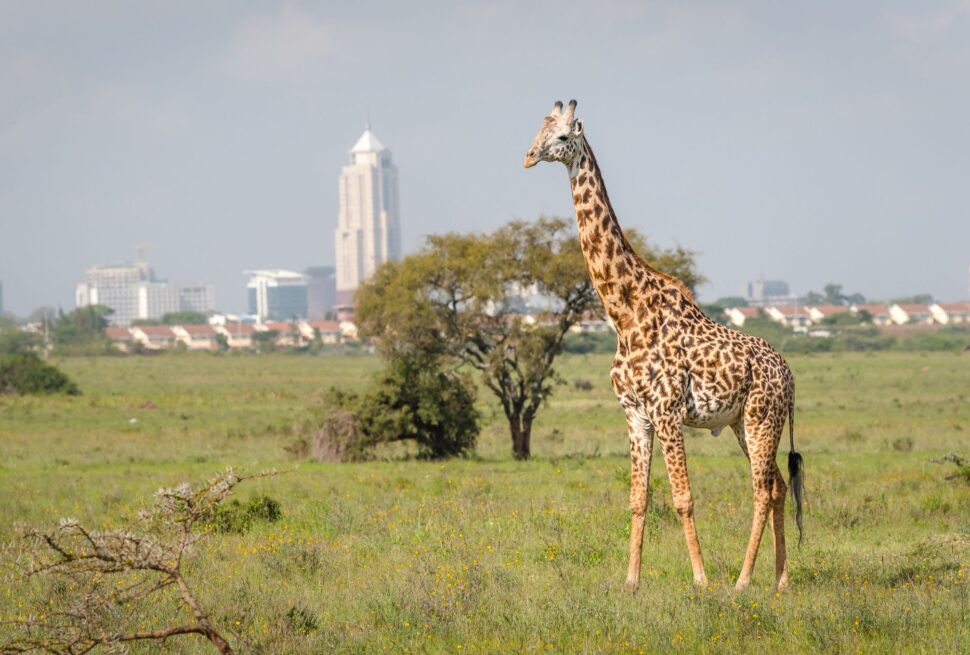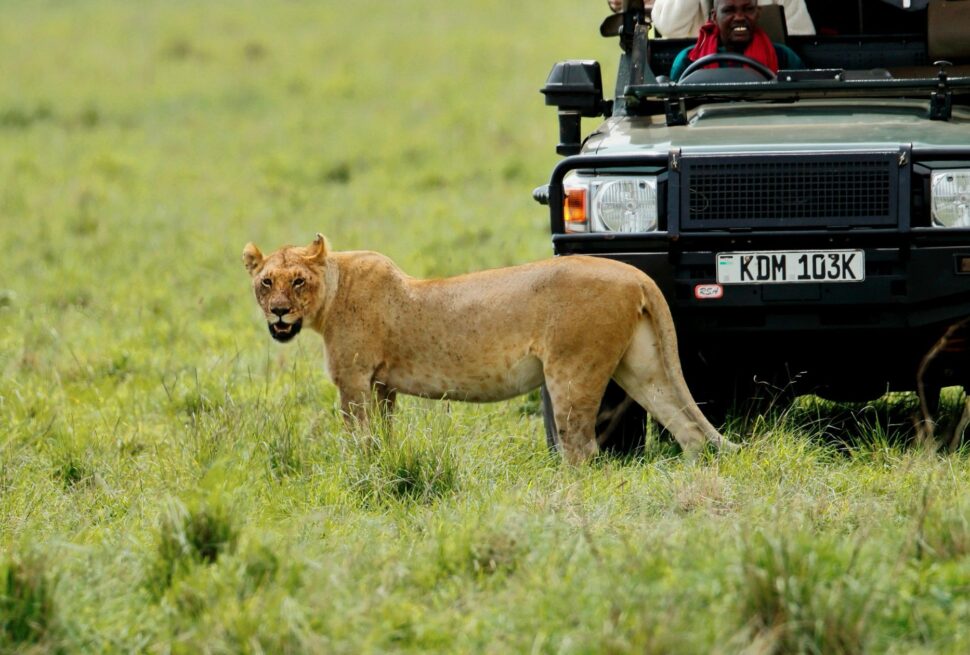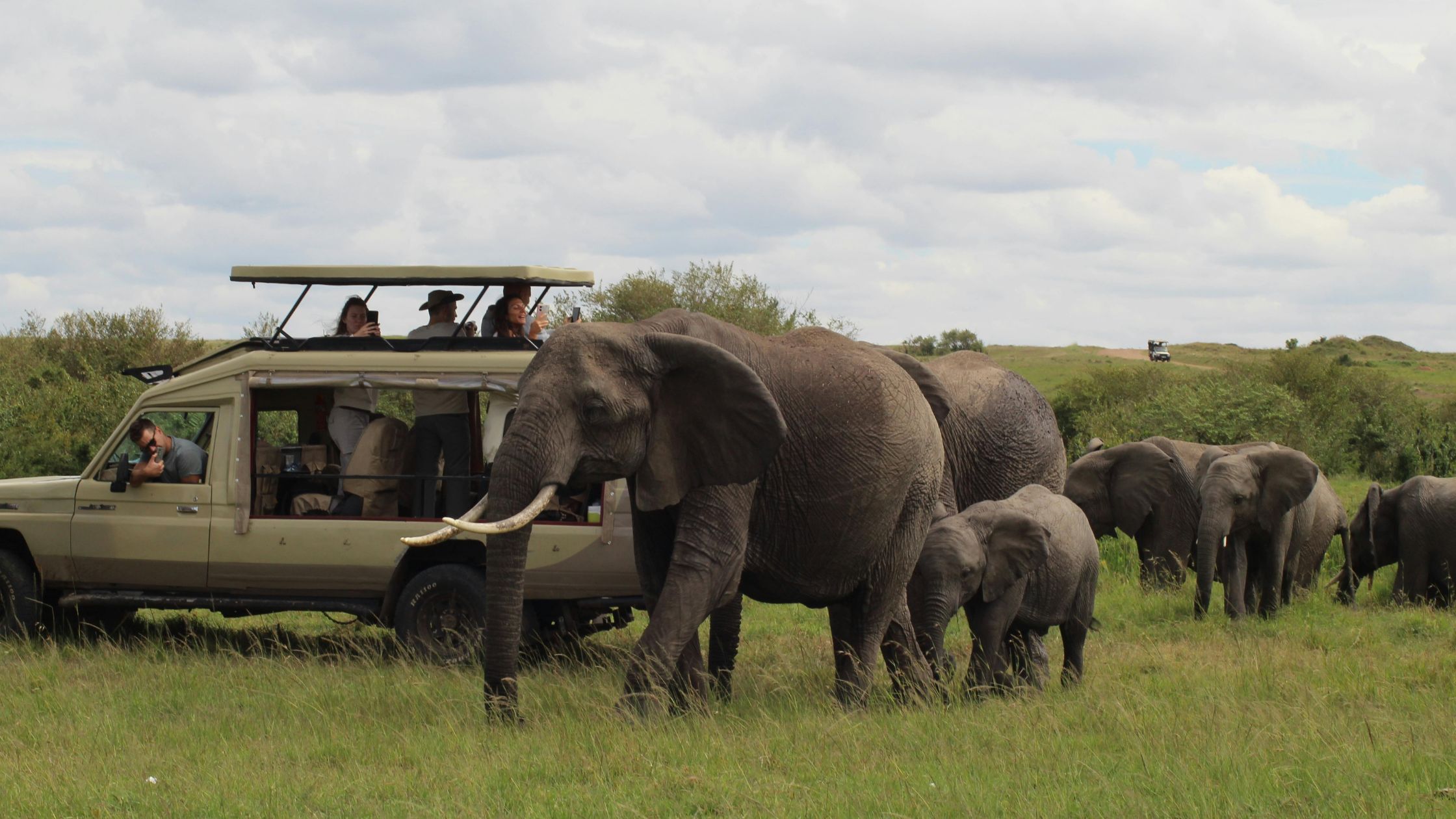
“How much does a Kenya safari cost?” It is the question our team at Mouti Tours and Travel hears more than any other. The honest answer is: it depends, and that answer is not a dodge. A Kenya safari can cost $900 per person or $9,000 per person, and both figures can represent genuinely good value depending on what you want, when you travel, how many people are in your group, and which parks you visit.
This article breaks down every variable that shapes your total safari price. By the end, you will know exactly what drives costs up or down, what is included in a typical package, what hidden extras to watch for, and how to read a safari quote with confidence. If you have already read our overview of how much a Kenya safari costs, this article goes deeper into the mechanics behind each price component and offers a full Kenya safari cost breakdown.
| Quick Answer: Kenya Safari Cost at a Glance Kenya safaris range from approximately $150 per person per day (budget camping) to $1,500+ per person per day (ultra-luxury private camps)The six main cost drivers are: park fees, accommodation tier, transport and vehicle type, travel season, group size, and trip durationNational park and conservancy fees alone add $70–$200 per person per day and are non-negotiable Internal bush flights between parks add significant cost but save considerable travel time on longer itinerariesSolo travellers and couples pay more per person than groups of four or more, due to vehicle cost-sharingBooking directly with a Nairobi-based operator like Mouti Tours removes international agency margins and keeps your budget on the ground in Kenya |
The Six Factors That Determine Your Kenya Safari Price
Kenya safari pricing is not arbitrary. Every quote you receive is built from six core variables. Understanding them puts you in control of the conversation with any operator; and helps you make meaningful trade-offs rather than simply comparing headline numbers.
- National park and conservancy fees
- Accommodation tier and type
- Transport and vehicle choice
- Travel season and dates
- Group size and vehicle sharing
- Trip duration
Each of these is covered in detail below. At the end of the article, three worked budget scenarios show how these variables combine in practice.
Park Fees: The Non-Negotiable Cost
Park and conservancy fees are the one safari cost that cannot be negotiated, avoided, or removed from a quote. They are set by Kenya Wildlife Service (KWS) and the relevant conservancy authorities, and they apply per person per day regardless of your accommodation level.
National Park Fees (KWS Rates)
Non-resident visitor fees at Kenya’s most popular parks currently run approximately:
- Maasai Mara National Reserve: $80 per adult per day (reserve fee, paid to Narok County)
- Amboseli National Park: $90 per adult per day
- Samburu National Reserve: $70–$90 per adult per day
- Lake Nakuru National Park: $60–$70 per adult per day
- Tsavo East and Tsavo West: $52–$60 per adult per day each
- Lake Naivasha (Hell’s Gate): $25–$35 per adult per day
These are non-resident rates, Kenyan residents and East African citizens pay significantly lower fees. Children under 3 generally enter free; children aged 3–17 pay reduced rates at most parks.
Conservancy Fees: The Maasai Mara Exception
The Maasai Mara is unique in Kenya because it sits within both a national reserve and a series of private conservancies that surround it. Conservancies such as the Mara Triangle, Olare Motorogi, Naboisho, and Mara North charge their own separate conservation fees (typically $80–$150 per person per night) on top of the national reserve fee.
If your accommodation sits within a private conservancy (which many premium lodges do), you will pay both the reserve fee and the conservancy fee. This is not double-charging — conservancy fees fund anti-poaching, Maasai community partnerships, and the wildlife corridors that make the Mara ecosystem function. But it is a cost line that many first-time safari planners overlook entirely.
Always ask your operator to itemise park fees and conservancy fees separately in your quote.
Accommodation: The Biggest Variable in Your Budget
Accommodation is typically the largest single cost in a Kenya safari package, and the range is enormous. The same safari route (say, Maasai Mara and Amboseli over seven days) can be done on a budget camping setup or in a luxury private tented camp, with a price difference of four or five times per person.
| Tier | Accommodation | Per Person/Day (excl. flights) | Ideal Group Size | Typically Includes |
| Budget Camping | Permanent tented camps, shared facilities | ~$150–$300 | 4–6 pax (shared vehicle) | Game drives, meals, park fees (sometimes) |
| Mid-Range | Mid-tier tented camps or lodges, en-suite | ~$300–$600 | 2–4 pax | Game drives, full board, park fees |
| Luxury Lodge | Premium lodges and high-end tented camps | ~$600–$1,000 | 2–4 pax, private vehicle | Game drives, full board, park fees, guide |
| Ultra-Luxury | Private conservancy camps, exclusive use | $1,000–$1,500+ | 2+ pax (exclusive) | All activities, all meals, transfers, park fees |
At the budget end, budget camping safaris use semi-permanent tented camps with shared ablution facilities. Meals are prepared by a camp cook and eaten communally. Game drives are conducted in shared 4×4 vehicles. These safaris deliver an authentic bush experience at a fraction of the luxury price.
At the premium end, luxury lodge safaris use properties with private plunge pools, gourmet dining, spa facilities, and personalised service. Private game drives depart on your schedule. The wildlife is identical — a leopard in a tree looks the same from any vehicle.
One important note: higher-tier accommodation almost always includes more in the package price. Luxury lodges typically bundle game drives, all meals, park fees, and sometimes even laundry. Budget camps may charge separately for some game drives or meals. Always compare quotes on an all-in basis.
Transport and Vehicle Type
Safari Van vs. 4×4 Land Cruiser
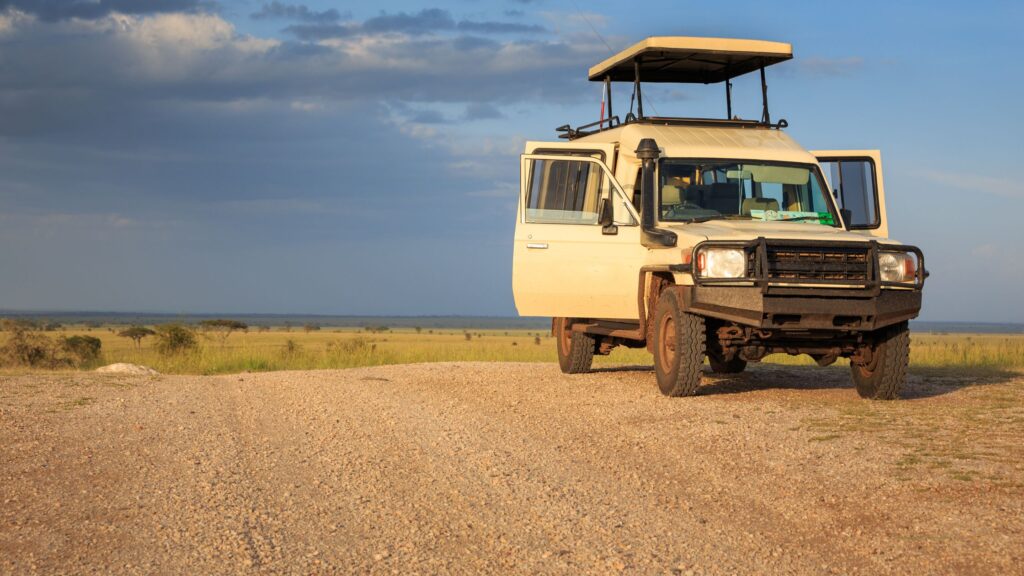
The vehicle your group travels in has a direct impact on both your experience and your total cost. Kenya’s two main safari vehicle types are the extended safari van (pop-up roof) and the open-sided or rooftop 4×4 Land Cruiser or Land Rover.
- Safari vans carry 6–7 passengers and offer a lower per-person cost when shared. They are comfortable on tarmac and reasonable on most park tracks.
- 4×4 Land Cruisers offer superior ground clearance, wider window access for photography, and a better all-terrain experience; particularly in the Mara, Samburu, and Tsavo. They typically carry 4–6 passengers.
For private groups of two or four, a private Land Cruiser at a higher per-vehicle cost but exclusive to your group represents the best experience-to-value ratio. For budget travellers willing to share, a joining-group safari in a safari van is the most cost-effective option.
Road Transfer vs. Internal Bush Flight
How you move between parks is one of the most significant cost decisions in any Kenya safari itinerary.
- Road transfers are included in most safari packages and add no extra cost. Nairobi to the Maasai Mara by road takes approximately 5–6 hours; Nairobi to Amboseli takes 4–5 hours.
- Internal bush flights from Wilson Airport (Nairobi) to the Mara or Amboseli cost approximately $200–$350 per person one-way. They reduce travel time to 45–60 minutes and are standard practice on premium itineraries.
On a 7-day safari covering three parks, the cost difference between full road transfers and a mixed road-and-flight itinerary can easily reach $800–$1,200 per person. The trade-off is time; hours saved on transfers are hours available for game drives.
Travel Season: How Your Dates Move the Price
Kenya’s safari calendar divides roughly into peak season, shoulder season, and low season; and your travel dates affect both lodge rates and the overall quality of the wildlife experience. For a full breakdown of the best times to visit, see our Best Time to Visit Kenya for Safari guide.
Peak Season (July–October and January–February)
July to October is the Great Migration season in the Maasai Mara — the period when wildebeest river crossings attract visitors from around the world. January to February is peak big cat season in Amboseli. Lodge rates during these months are at their highest, often 20–40% above mid-season prices. Availability at top properties books out 6–12 months in advance.
Low and Green Season (April–May and November)
Kenya’s long rains fall primarily in April and May, and short rains arrive in November. Lodge rates drop significantly during these months (sometimes by 30–50%) and park congestion falls away entirely. The landscape turns dramatically green, baby animals are abundant, and serious wildlife is still present. Some remote tracks become challenging, but the overall experience is often exceptional for travellers willing to embrace the season. See our upcoming guide to safaris in the rainy season for more detail.
Shoulder Season (June and November-December)
June offers a sweet spot: rates begin to rise toward peak but are not yet at their highest, park tracks are generally dry, and wildlife activity is excellent. December and the Christmas-New Year period sees a spike in demand and premium pricing, particularly at coastal beach properties.
Group Size: The Hidden Multiplier
Group size is one of the most underestimated cost variables in Kenya safari planning. The reason is simple: most safari costs are per vehicle, not per person. A private 4×4 Land Cruiser costs roughly the same whether it carries two people or six.
How Cost-Sharing Works
- Solo traveller in a private vehicle: pays 100% of vehicle cost alone — the most expensive configuration per person
- Couple in a private vehicle: each person pays 50% of vehicle cost — significantly better
- Group of four in a private vehicle: each person pays 25% of vehicle cost — the most efficient common configuration
- Group of six: maximum per-person value from a single vehicle
On a 7-day private safari, the difference between a solo traveller and a group of four sharing the same vehicle can be $1,500–$2,500 per person. This is why solo travellers and couples often get significantly better value from group joining safari options.
Group Joining Safaris: The Solo and Couple Solution
Group joining safaris are pre-scheduled departures where individual travellers or small groups are placed together in a shared vehicle. Per-person costs are lower because vehicle expenses are shared. The trade-off is reduced flexibility on timings and game drive scheduling. For solo travellers, our upcoming Kenya Safari for Solo Travelers guide covers this in full detail.
Duration: How Long to Budget For
Safari duration affects your total cost in two ways: longer trips cost more in absolute terms, but they cost less per day because fixed costs (vehicle positioning, first-night logistics, arrival transfers) are spread across more days.
- 3-day safari: The shortest practical option. Typically covers one park (usually the Maasai Mara or Amboseli). High daily cost relative to total because fixed costs dominate.
- 5-day safari: Allows two parks comfortably, with enough time to settle into the rhythm of game drives.
- 7-day safari: The most popular Kenya safari duration. Covers three parks at a reasonable pace, with time for afternoon drives, sunrise drives, and lodge downtime.
- 10–14-day safari: Best value per day, allows a comprehensive Kenya circuit plus an optional beach extension to Diani or Mombasa.
For a detailed look at what fits into each duration, see our Best Kenya Safari Itineraries: 3, 5, 7 and 10-Day Route Ideas.
What’s Usually Included, and What Isn’t
One of the most common frustrations in safari planning is comparing quotes that include different things. Always evaluate any Kenya safari quote on a like-for-like, fully inclusive basis. Here is a standard reference guide:
| ✓ Typically Included | ✗ Typically Excluded |
| Game drives (number varies by tier) | International and domestic flights |
| Full-board meals at lodges and camps | Kenya eTA visa fee (~$30 USD) |
| Accommodation for the nights booked | Travel and medical evacuation insurance |
| Safari vehicle and driver-guide | Gratuities for guide, driver, and lodge staff |
| Airport or airstrip transfers | Optional activities (balloon safari, cultural visits) |
| Park fees (confirm with your operator) | Alcoholic beverages (at most lodges) |
| Bottled water during game drives | Personal shopping and souvenirs |
| Laundry (sometimes charged at remote camps) | |
| Conservancy fees (sometimes excluded — always confirm) |
The most important items to verify are park fees (sometimes listed separately), conservancy fees (sometimes omitted entirely from the headline price), and whether the quoted rate is per person sharing or per person on a single occupancy basis.
Hidden Costs to Watch For
Even well-structured quotes can obscure certain costs. Here are the most common extras that first-time safari travellers encounter unexpectedly:
- Conservancy fees: As outlined above, private conservancy fees in the Maasai Mara ecosystem can add $100–$150 per person per night. Confirm whether they are included in your quote or payable on arrival.
- Single supplement: Solo travellers occupying a room alone may be charged a single supplement of 20–50% above the per-person-sharing rate. Ask upfront.
- USD cash for tips: Tipping guide-drivers, lodge staff, and trackers is standard practice and expected. Budget approximately $15–20 per day for a guide-driver and $5–10 per day for lodge staff as a reasonable starting point. USD cash in small denominations is the norm.
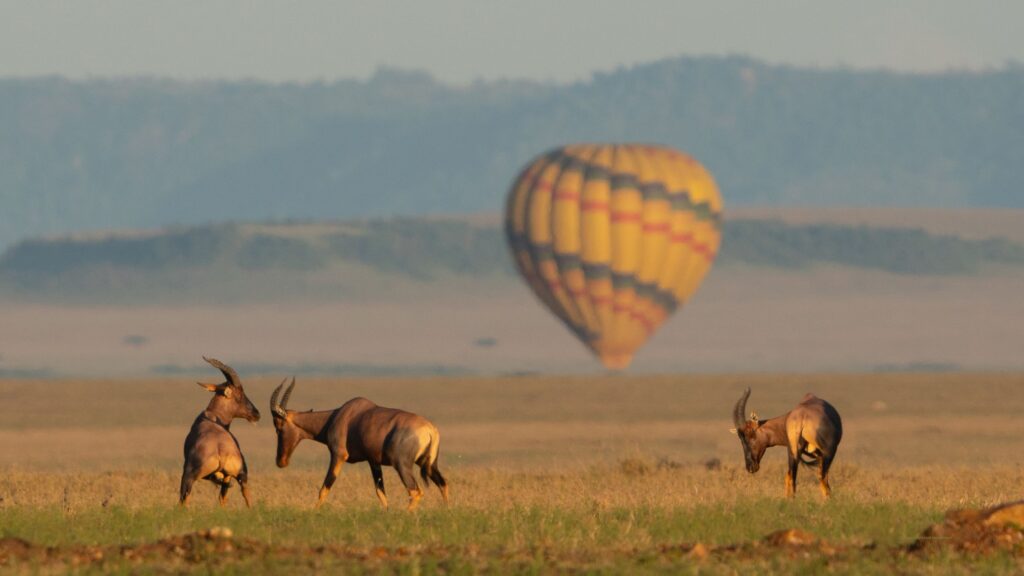
- Balloon safari: A hot air balloon flight over the Maasai Mara costs approximately $450–$550 per person and is one of Kenya’s most extraordinary experiences, but it is never included in a standard package.
- Walking safari or guided cultural visits: Activities beyond standard game drives (guided bush walks, Maasai village visits, beekeeping tours) are typically charged as optional extras.
- International flights: Almost never included in a Kenya safari quote unless specifically stated. Nairobi is well-served by Kenya Airways, British Airways, Emirates, KLM, and Ethiopian Airlines.
- Travel insurance: A mandatory cost for responsible travel to Kenya. You need a policy that includes emergency medical evacuation coverage; standard travel insurance is generally not sufficient. Budget $100–$250 depending on your country of origin and trip duration.
Sample Safari Cost Scenarios
The following three examples are approximate all-in budgets per person (excluding international flights and travel insurance) to illustrate how the variables above combine in practice. All figures are directional, actual quotes depend on specific dates, operator, and lodge availability.
| Safari Type | Route | Duration | Group | Est. Total/Person |
| Budget Road Safari | Maasai Mara + Lake Nakuru | 5 days | 2 sharing | ~$900–$1,400 |
| Mid-Range Private | Maasai Mara + Amboseli | 7 days | 2 pax | ~$2,500–$4,000 |
| Luxury (Flight) | Mara + Amboseli + Samburu, 1 bush flight | 7 days | 2 pax | ~$5,500–$9,000+ |
Budget Scenario: 5-Day Road Safari, 2 Pax Sharing
Maasai Mara National Reserve (3 nights) + Lake Nakuru National Park (1 night). Budget tented camps, shared vehicle, full board. Park fees included. Approximate total per person: $900–$1,400.
Mid-Range Scenario: 7-Day Private Safari, 2 Pax
Maasai Mara (3 nights) + Amboseli National Park (2 nights). Mid-tier lodges, private Land Cruiser, full board, park fees included, road transfers. Approximate total per person: $2,500–$4,000.
Luxury Scenario: 7-Day Safari with Bush Flight, 2 Pax
Maasai Mara (3 nights, conservancy camp) + Amboseli (2 nights) + Samburu National Reserve (2 nights). Premium lodges, private vehicle, one internal bush flight, full board, park and conservancy fees included. Approximate total per person: $5,500–$9,000+.
| Mouti Tours Field Insight: Joe Mouti, Lead Guide “The most common budgeting mistake I see is clients who research lodge rates carefully, then overlook park and conservancy fees entirely. In the Maasai Mara, conservancy fees alone can run $100–$150 per person per night on top of your accommodation rate. On a 7-day safari with three parks, that is a meaningful additional budget line that catches people off guard. Always ask your operator for a fully itemised quote because park fees, conservancy fees, transfers, and all inclusions listed separately. If a quote does not break these out, ask why.” — Joe Mouti, Lead Guide, Mouti Tours and Travel |
Frequently Asked Questions
How much does a Kenya safari cost per day?
Daily Kenya safari costs range from approximately $150–$300 per person on a budget camping safari to $600–$1,000+ on a luxury lodge safari. Ultra-luxury private conservancy camps can exceed $1,500 per person per day including all activities and meals. Park fees of $60–$200 per person per day are an additional component in all tiers.
What is included in a Kenya safari package price?
Most Kenya safari packages include accommodation, full-board meals, game drives, a safari vehicle and guide-driver, and airport or airstrip transfers. Park fees may or may not be included — always confirm. Items typically excluded include international flights, travel insurance, visa fees, tips, alcoholic beverages, and optional activities such as balloon safaris.
Is Kenya safari cheaper in the rainy season?
Yes. Lodge rates during Kenya’s low season (April–May and November) are typically 30–50% lower than peak season rates. Park congestion is minimal, landscapes are lush and green, and wildlife is still abundant. The main trade-off is that some remote tracks can become difficult in heavy rain, and certain ultra-premium camps close for maintenance during the long rains.
How much are Kenya national park fees?
Non-resident park fees currently range from approximately $52 per day at Tsavo parks to $90 per day at Amboseli. The Maasai Mara National Reserve charges approximately $80 per day for the reserve fee, with additional conservancy fees of $80–$150 per person per night if your accommodation sits within a private conservancy. Always verify current KWS rates before travel as fees are periodically revised.
Is it cheaper to book a Kenya safari directly or through an international agency?
Booking directly with a Nairobi-based operator like Mouti Tours removes the international agency commission layer, which typically adds 15–25% to the base safari price. You also benefit from dealing directly with the team on the ground, local knowledge, and direct relationships with lodges and camps. Always verify that your operator is registered with the Kenya Tourism Board and carries appropriate insurance.
How much should I budget for tips on a Kenya safari?
A widely used guideline is $15–20 per day for your guide-driver and $5–10 per person per day for lodge staff (divided at checkout). On a 7-day safari, budget approximately $150–$200 per person for gratuities. Tips should be paid in US dollars cash in small denominations. For more detail, see our upcoming Kenya Safari Tipping Guide.
What is a single supplement and do I have to pay it?
A single supplement is an additional charge applied when a solo traveller occupies a double or twin room alone. Most lodges and camps price accommodation per person sharing a room, and when a room is occupied by one person, the additional cost of the empty bed is passed on as a supplement. Single supplements typically run 20–50% above the per-person-sharing rate. Some operators offer group joining safari options where solo travellers avoid single supplements by sharing a vehicle with others.
How do I get an accurate safari quote?
To get a fully accurate quote, provide your operator with: your preferred travel dates, the parks and regions you want to visit, your group size, your approximate budget per person, your preferred accommodation tier (budget, mid-range, or luxury), and any special requirements (dietary, accessibility, photographic focus). A reputable operator will return an itemised quote showing park fees, conservancy fees, accommodation, transport, and inclusions as separate line items. If a quote gives only a headline price without breakdown, request the detail before committing.
| Ready to Get a Transparent Safari Quote? Every Mouti Tours quote is fully itemised; park fees, conservancy fees, accommodation, transport, and all inclusions listed clearly. No hidden extras.Tell us your travel dates, preferred parks, group size, budget, and comfort level, and we will build you a custom Kenya safari itinerary and quote at no cost and no obligation. → Request your free safari quote here 📞 +254 718 664 422 | ✉ info@moutitours.co.ke |