“Is Kenya safe?” is the first question we hear from almost every client who reaches out to book a safari, and it is exactly the right question to ask. It deserves an honest answer, not a sales pitch.
The short answer is yes. Kenya is safe for tourists, and millions of international visitors travel here every year without incident. Families with young children, solo travellers, honeymooners, seniors, and first-time safari-goers all visit Kenya regularly and come home with extraordinary experiences. But safety is not something you should take for granted; it is something you plan for. That is where this guide comes in.
This article covers everything a first-time visitor needs to know: the real picture in Kenya’s national parks, how to navigate Nairobi safely, what health precautions are non-negotiable, what transport choices matter, and which parts of the country to avoid entirely. Read it, take note of the practical tips, and you will arrive in Kenya well-prepared.
| Quick Answer: Is Kenya Safe for Tourists? |
| • Kenya is safe for tourists: millions visit every year without incident, including families, solo travellers, and first-timers. |
| • Safari parks such as Maasai Mara, Amboseli, and Samburu are extremely safe when visited with a reputable operator. |
| • Nairobi requires standard big-city caution: stay in recommended areas, use trusted transport, and avoid walking alone at night. |
| • Malaria is a real health risk; consult a travel doctor at least 4–6 weeks before departure and take prescribed antimalarials. |
| • Travel insurance with emergency medical evacuation coverage is essential, not optional. |
| • Book through a registered, reputable Kenyan tour operator and follow your guide’s instructions at all times in the parks. |
Is Kenya Safe Right Now?
Kenya has been one of East Africa’s most stable, tourism-developed nations for decades. It receives well over 1.5 million international visitors a year, with the Maasai Mara, Amboseli, and the Kenyan coast being among the most visited destinations in the entire continent.
Like any country, Kenya has areas that require more caution than others, and we will be specific about those below. But the mainstream safari destinations that most international tourists visit (the Maasai Mara, Amboseli, Samburu, Lake Nakuru, Lake Naivasha, and the coast) are genuinely safe, well-managed, and visited daily by tourists from around the world.
The Kenyan government treats tourism as a major pillar of the economy, and the Kenya Wildlife Service (KWS) and Kenya Tourism Board invest significantly in keeping parks and tourist areas well-policed and accessible. The vast majority of incidents that do affect tourists involve petty theft in urban environments, not violence, and not wildlife parks.
Government travel advisories from the USA, UK, Canada, and Australia all list Kenya as a destination requiring “standard precautions” in tourist areas, the same level as many popular European and Asian destinations. That context matters when reading advisory language.
Safari Safety in Kenya’s National Parks
Kenya’s national parks and conservancies are, in the context of everyday safety, extremely safe environments for tourists. Wildlife is the primary consideration (not crime), and that risk is managed effectively through professional guiding, established protocols, and well-maintained vehicles.
How Safe Are Game Drives?
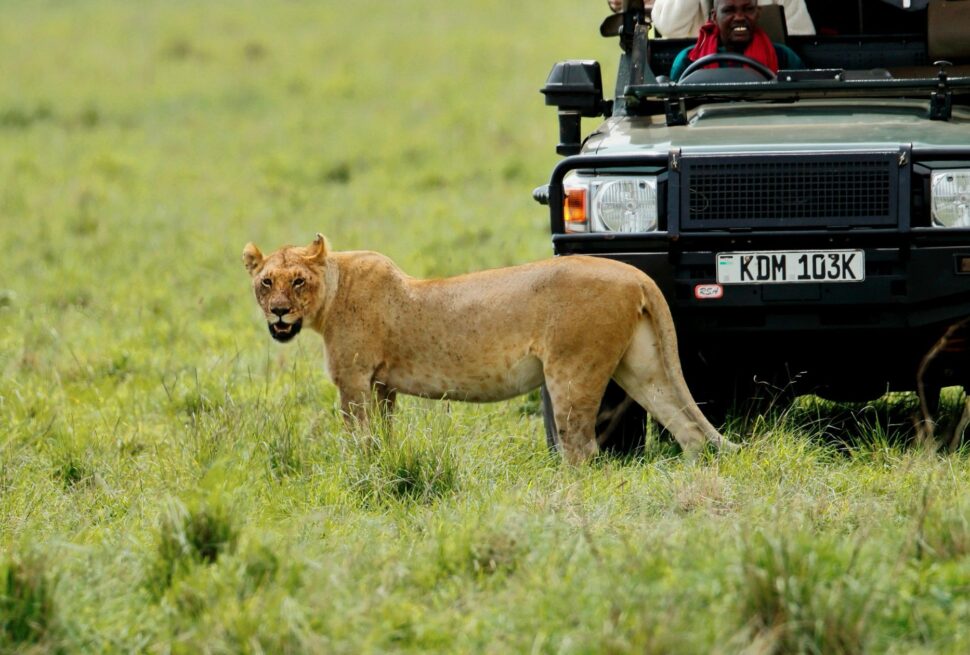
Game drives in Kenya’s parks are conducted in enclosed 4×4 vehicles, typically Toyota Land Cruisers or custom safari vans with pop-up roofs for wildlife viewing. Your driver-guide is trained in wildlife behaviour and knows how to read animal body language, maintain safe distances, and respond to sudden movement. Guides operating in parks like the Maasai Mara and Samburua are licensed by the Kenya Professional Safari Guides Association (KPSGA) and are deeply familiar with their specific ecosystems.
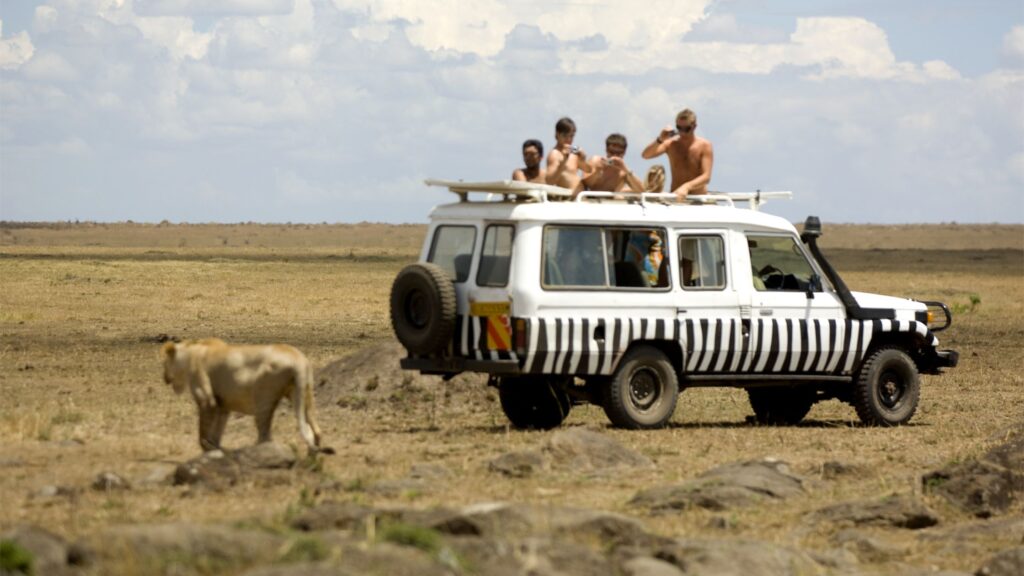
Serious incidents involving wildlife on game drives are extremely rare. When they do occur, they are almost always the result of not following guide instructions; exiting the vehicle without permission, making loud noises, or attempting to hand-feed animals.
Wildlife Safety Rules You Must Follow
- Never exit the vehicle during a game drive unless your guide explicitly instructs you to, even during a flat tyre.
- Keep voices low and movements slow when wildlife is close to the vehicle.
- Do not use flash photography near animals, particularly elephants, buffalo, and big cats.
- Follow your guide’s instructions immediately and without question; they know the animals and the terrain.
- Do not attempt to feed, touch, or interact with any wildlife, regardless of how approachable an animal appears.
- At night, always use a torch or headlamp when moving around camp; nocturnal wildlife does move through lodge grounds.
Park-Specific Safety Notes
All of Mouti Tours’ primary safari destinations (Maasai Mara, Amboseli, Samburu, Tsavo East, Lake Nakuru, and Lake Naivasha) are within Kenya’s established, well-monitored safari circuit. They are visited every single day by international tourists. The infrastructure, guiding standards, and KWS ranger presence in these areas are robust.
Is Nairobi Safe for Tourists?
Nairobi is a major African capital city of around five million people. Like any large city (London, Johannesburg, New York, or Mexico City), it requires situational awareness and some basic precautions. It is not a city to be feared, but it is not a city to be casual in either.
For tourists passing through Nairobi at the start or end of a safari, the experience is typically smooth and positive. Most international visitors stay in the Karen, Westlands, Gigiri, or Kilimani areas, which are safe, well-serviced neighbourhoods with good hotels, restaurants, and shopping.
Areas to Exercise More Caution
The central business district (CBD), particularly around River Road and the bus stations, requires more vigilance; these are high foot-traffic areas where pickpocketing and phone snatching can occur. The Eastlands area is not typically visited by tourists and is best avoided.
That said: if your safari begins and ends in Nairobi and you stay in the recommended neighbourhoods, take organised transport, and avoid walking alone after dark, your Nairobi experience will almost certainly be problem-free.
Transport in Nairobi: What to Use and What to Avoid
- Use Uber, Bolt, or your tour operator’s pre-arranged transfer for all airport and in-city travel. These are safe, trackable, and priced fairly.
- Avoid hailing taxis from the street; only use metered or app-based vehicles.
- Avoid public minibuses (matatus) as a tourist; they are heavily crowded and not the right choice for visitors unfamiliar with the routes.
- Mouti Tours arranges airport pickups for all clients as standard; if you are travelling with us, you will be met at arrivals and transferred directly to your hotel or first stop.
- JKIA (Jomo Kenyatta International Airport) is safe and well-managed. Keep your bags close in the arrivals hall and proceed directly to your arranged transport.
Practical Nairobi Safety Tips
- Keep your phone in your pocket or bag in public, not in your hand as you walk.
- Do not display expensive cameras, jewellery, or cash in busy public areas.
- Avoid walking alone after dark, even in generally safe neighbourhoods.
- If staying for a day or more, visit the Nairobi National Park, Karen Blixen Museum, or David Sheldrick Elephant Orphanage; all are safe and excellent ways to spend time in the city.
Transport Safety in Kenya
Road Safety: The Real Picture
Road safety is a genuine concern in Kenya, and it is the transport-related risk most worth knowing about. Kenyan highways, particularly the Nairobi–Nakuru and Nairobi–Mombasa corridors, carry heavy traffic and can be challenging, especially at night. Accidents involving public vehicles and heavy trucks do occur.
This is exactly why the vehicle and driver your safari operator uses matter so much. Mouti Tours operates well-maintained, regularly serviced 4×4 vehicles with experienced drivers who know the park roads, travel during daylight hours, and do not rush itineraries. The risk profile of a reputable safari vehicle is entirely different from that of a public bus on a highway.
Self-Drive Safaris: Not Recommended for First-Timers
Self-drive safaris are technically possible in Kenya but are not recommended for first-time visitors. Park roads in the Mara, Tsavo, and Samburu can be badly corrugated, flooded seasonally, or unmarked. More importantly, navigation within parks requires knowledge of animal behaviour and terrain that a first-timer simply will not have. A wrong turn near a pride of lions or a herd of buffalo is not a situation you want to manage without an experienced guide.
Internal Bush Flights
Many Mouti Tours itineraries include internal flights between parks on small aircraft, typically Cessna Caravans operating out of Wilson Airport in Nairobi or small bush airstrips. Kenya’s domestic aviation sector is well-regulated, and the airlines operating safari circuits (including Safarilink and AirKenya) have strong safety records. The luggage limit on bush flights is typically 15kg in a soft-sided bag; see our Kenya Safari Packing List for full details on what this means for your luggage choices.
Health and Medical Safety in Kenya
Health is arguably the most important safety dimension of Kenya safari travel, and the one that requires the most preparation. Most of the health risks associated with Kenya are entirely manageable with the right preparation, but you need to start early.
Malaria Prevention
Kenya is a malaria-risk country throughout the year, with higher transmission during and after the rainy seasons (March–May and October–November). This applies across the major safari destinations (Maasai Mara, Amboseli, Samburu, and the coast), not just in remote areas.
Consult a travel medicine doctor or pharmacist at least 4–6 weeks before your departure date to discuss antimalarial medication options. The three most commonly prescribed options are Atovaquone-Proguanil (Malarone), Doxycycline, and Mefloquine; each has different dosing schedules, costs, and side-effect profiles, and the right choice depends on your health history.
In addition to medication: apply DEET-based insect repellent (30–50% DEET) to exposed skin from dusk onwards, wear long-sleeved clothing in the evenings, and sleep under a mosquito net where provided. Most reputable Kenyan lodges spray rooms at dusk and provide nets; but your pharmaceutical protection is the foundation.
Vaccinations and Entry Requirements
A yellow fever vaccination certificate is required if you are arriving from a yellow fever endemic country (including many parts of sub-Saharan Africa and South America). If you are travelling directly from the USA, UK, Canada, or Australia, the certificate is not mandatory, but it is strongly advisable if your trip involves any onward travel through endemic regions.
Other vaccinations commonly recommended for Kenya include: Hepatitis A and B, typhoid, tetanus and diphtheria, rabies (particularly for longer trips or those involving wildlife-heavy activities), and meningococcal meningitis. Consult a travel health clinic for personalised advice based on your itinerary.
Food and Water Safety
Drink bottled or filtered water only. Reputable lodges and tented camps provide sealed bottled water as standard. Avoid ice in drinks unless you are confident of its source. The food at established safari lodges and camps in Kenya is generally safe and of good quality; most lodges source fresh produce locally and prepare food to high standards.
If you are spending time in local towns or markets, stick to hot, freshly cooked food and peel any raw fruit yourself. Carry oral rehydration sachets and basic anti-diarrhoea medication in your personal first aid kit; upset stomachs are not unusual on any international trip, and having the right treatment on hand makes recovery faster.
Travel Insurance with Medical Evacuation
This is non-negotiable on a Kenya safari and deserves its own paragraph. Standard travel insurance policies are typically not sufficient for safari travel. You must have a policy that includes emergency medical evacuation coverage. Medical facilities in remote safari parks are extremely limited, and an air evacuation from the Maasai Mara or Samburu to Nairobi (or from Nairobi to your home country) can cost upwards of USD 20,000 to USD 80,000 without insurance coverage.
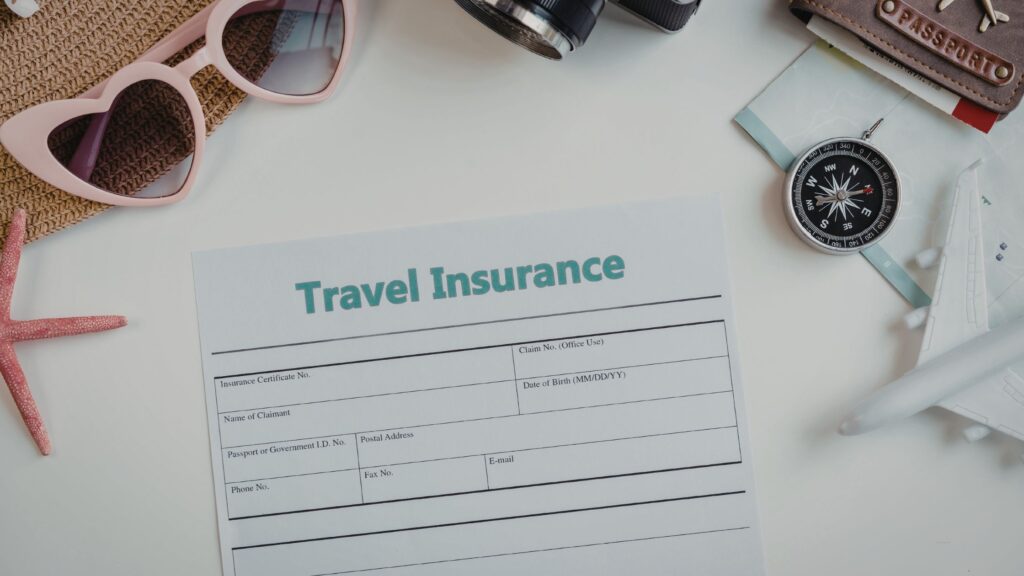
Mouti Tours strongly recommends World Nomads or a specialist safari travel insurance provider with documented Africa-specific coverage. Print your policy documents and keep the emergency evacuation number saved in your phone before you travel.
Altitude and Heat
Nairobi sits at around 1,700m above sea level, and some safari areas (including the Aberdares and parts of the Rift Valley) sit higher still. Most visitors have no issues, but those with existing cardiovascular conditions should consult their doctor before travel. On the savannah, daytime temperatures in Amboseli and Tsavo regularly exceed 32°C; drink plenty of water on game drives and wear a wide-brim hat and high-SPF sunscreen.
Regional Safety: Which Parts of Kenya to Avoid
Kenya is a large country (roughly the size of France) and safety levels vary by region. Being specific about this is important.
The following regions have active travel advisories and should be avoided entirely by tourists:
- Areas within 60 km of the Kenya–Somalia border (including Mandera, Wajir, and Garissa County border zones), due to the risk of al-Shabaab activity.
- Parts of northern Kenya near the South Sudan border, due to localised instability.
- Coastal border areas near the Tana River delta, covered by specific advisories from UK and US governments.
None of these areas is on any standard tourist itinerary. The mainstream Kenya safari circuit (Nairobi, Maasai Mara, Amboseli, Samburu, Lake Nakuru, Naivasha, and the coast at Diani, Watamu, or Mombasa) is well within the safe zone according to all major government advisories.
Read travel advisories from the US State Department, UK Foreign Office (FCDO), or Global Affairs Canada as reference documents, not as definitive statements about the entire country. Advisories tend to flag worst-case regional risks; they do not capture the day-to-day reality of the tourist circuit.
Kenya Safety by Destination: Quick Reference
| Destination | Safety Rating | Key Notes |
| Maasai Mara | ✅ Very Safe | Well-policed conservancy; professional guides; one of Kenya’s most visited parks |
| Amboseli | ✅ Very Safe | Excellent infrastructure; open plains; easy visibility; family-friendly |
| Samburu | ✅ Very Safe | Remote but professionally managed; expert guides escort all game drives |
| Lake Nakuru | ✅ Very Safe | Compact park; fenced perimeter; very close to Nakuru town |
| Lake Naivasha | ✅ Very Safe | Popular with families; boat safaris fully guided; short drive from Nairobi |
| Tsavo East / West | ✅ Safe | Vast and remote; stick to your operator’s planned route and vehicle |
| Nairobi (tourist areas) | ⚠️ Exercise Caution | Westlands, Karen, Gigiri are fine; avoid walking alone at night in the CBD |
| Northern border regions | ❌ Avoid | Near the Somali and South Sudan borders; not included in any safari itinerary |
12 Practical Safety Tips for First-Time Kenya Tourists
- Book through a registered, reputable Kenyan tour operator; one with verifiable reviews, a physical Nairobi presence, and licensed guides.
- Arrange your airport transfer in advance. Do not accept rides from unlicensed touts at JKIA arrivals.
- Start malaria medication before you leave home, not when you arrive in Kenya.
- Make digital and physical copies of your passport, Kenya eTA approval, travel insurance, and vaccination certificates.
- Register your trip with your country’s embassy in Nairobi (most governments offer a free online traveller registration service).
- Share your full itinerary with a trusted contact at home, including lodge names, contact numbers, and scheduled travel dates.
- Keep your phone in your pocket on Nairobi streets, not in your hand.
- Carry a mix of USD in small denominations for tips and park areas; withdraw Kenyan Shillings from a Nairobi ATM before heading to remote parks.
- Follow your guide’s instructions in the parks without question; their decisions are based on years of experience with specific animals.
- Never exit the safari vehicle during a game drive unless explicitly instructed by your guide.
- Use a headlamp at night in bush camps; nocturnal wildlife does move through lodge grounds and pathways are often unlit.
- Bring a high-quality DEET repellent from home; reliable brands are available in Kenya but finding your preferred product in a remote park town is not guaranteed.
| Mouti Tours Guide Tips: Straight from the Field |
| • “Most of the safety concerns clients come to us with are about Nairobi, and most of them are based on outdated information or news headlines rather than the actual tourist experience. The neighbourhoods we work in are fine. What matters most is having organised transport and not wandering alone at night.” — Joe Mouti, Lead Guide |
| • “Malaria prevention is the most commonly under-prepared area we see. People sort their packing and their visas but forget to book a travel health appointment. Do it at least 6 weeks before you fly.” — Mouti Tours Operations Team |
| • “In the Maasai Mara, we have never had a client injured by wildlife in years of operations. That record exists because we train our guides rigorously and our clients follow the rules in the vehicle. The parks are safe when you treat the environment with respect.” — Peter Mouti |
| • “Travel insurance with medical evacuation cover is not optional on a Kenya safari. Please do not skip it. A helicopter evacuation from the Mara can cost more than your entire trip. We always ask clients to confirm their coverage before we finalise bookings.” — Mouti Tours Operations Team |
Frequently Asked Questions
Is Kenya safe for solo female travellers?
Yes, Kenya is visited regularly by solo female travellers and is generally considered safe in the tourist circuit. The key precautions are the same as for any traveller: use organised transport, stay in recommended areas of Nairobi, avoid walking alone at night, and book through a reputable operator. Many solo female travellers join Mouti Tours’ group safari departures, which provide built-in safety in numbers and structured itineraries.
Is Nairobi airport safe?
Yes. Jomo Kenyatta International Airport (JKIA) is a modern, well-managed international airport with standard security protocols. Exercise the same awareness you would at any busy international terminal; keep your luggage close and move directly to your pre-arranged transport upon arrival. Do not accept help from unofficial “porters” or accept rides from unlicensed drivers in the arrivals hall.
Is it safe to travel to Kenya right now?
Yes, for the mainstream tourist circuit. As of the time of writing, Kenya’s major safari destinations and coastal areas are operating normally and receiving international tourists without incident. We recommend checking the latest advisory from your government (US State Department, UK FCDO, or Global Affairs Canada) before departure for any updated regional information.
What areas of Kenya should tourists avoid?
Tourists should avoid areas within 60 km of the Kenya–Somalia border (Mandera, Wajir, and parts of Garissa County), parts of the border with South Sudan, and specific coastal zones flagged in current advisories. None of these regions is on any standard tourist or safari itinerary. All mainstream safari parks and the Kenya coast are outside these advisory zones.
Is Kenya safe for families with children?
Kenya is an excellent family destination and is visited regularly by families with young children. Child-friendly safari lodges exist across the major parks, and the Amboseli–Kilimanjaro landscape and Maasai Mara migration are among the most spectacular wildlife experiences available anywhere in the world. See our Kenya Safari with Kids guide for specific recommendations on parks, pacing, and lodges.
Do I need travel insurance for a Kenya safari?0
Yes, and it must include emergency medical evacuation coverage specifically. Standard travel insurance is not sufficient. An air evacuation from a remote safari park to Nairobi, or from Nairobi to your home country, can cost USD 20,000–80,000 without the right coverage. Mouti Tours recommends World Nomads or a specialist Africa-safari insurer.
Are Kenya’s national parks safe from wildlife attacks?
Wildlife incidents involving tourists on guided safaris are extremely rare in Kenya. The overwhelming majority occur as a result of not following guide instructions; primarily exiting the vehicle without permission. When you stay in your vehicle, follow your guide’s direction, and treat the environment with respect, the parks are safe.
Is food safe to eat in Kenya?
Food at established safari lodges and camps is generally safe and of good quality. Drink bottled or filtered water only. If eating in local town restaurants, choose hot, freshly cooked food and avoid raw salads unless you are confident in the water source. Carry oral rehydration sachets and anti-diarrhoea tablets in your personal first aid kit as a precaution.
What vaccinations do I need for Kenya?
Recommended vaccinations for Kenya include Hepatitis A and B, typhoid, tetanus and diphtheria, and yellow fever (required if arriving from an endemic country). Rabies is recommended for longer trips or those involving wildlife activities. Consult a travel health clinic at least 4–6 weeks before travel for personalised advice based on your health history and itinerary.
How do I stay safe on a Kenya safari?
The key principles: book through a reputable operator with licensed guides and well-maintained vehicles; never exit the vehicle during a game drive unless instructed; follow your guide’s instructions immediately; take prescribed antimalarials and use DEET repellent consistently; carry valid travel insurance with medical evacuation cover; and keep a copy of all your documents in both digital and printed form.
| Talk to a Local Safari Expert Before You Book |
| Safety questions are some of the most important questions you can ask before booking a Kenya safari, and they deserve honest, ground-level answers, not generic reassurances. Our team at Mouti Tours has guided clients from the USA, UK, Canada, Australia, and beyond through the Maasai Mara, Amboseli, Samburu, and the Kenya coast. We know exactly what the risks are, how to manage them, and how to build an itinerary that keeps you safe, comfortable, and fully focused on the experience. Tell us your travel dates, where you want to go, and any concerns you have, and we will take care of the rest. → Request your free Kenya safari quote here 📞 +254 718 664 422 │ ✉ info@moutitours.co.ke |